
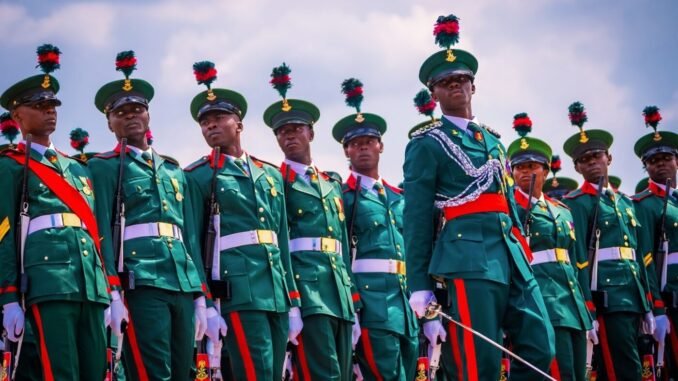
Understanding the difference between Tradesmen and Non-Tradesmen in the Nigerian Army is important if you plan to apply for Nigerian Army recruitment. During every recruitment exercise, applicants must choose either the Tradesmen/Women or Non-Tradesmen/Women category based on their qualifications. Selecting the correct category helps ensure your application meets the recruitment requirements and improves your chances of being considered for enlistment.
Table of Contents
ToggleQuick Comparison
| Feature | Tradesmen/Women | Non-Tradesmen/Women |
|---|---|---|
| Minimum Qualification | SSCE plus relevant trade or professional qualification | SSCE or equivalent |
| Additional Certificates | ND, NCE, Trade Test, City & Guilds, NABTEB Technical, or other approved qualifications | Not required |
| Primary Role | Technical and specialized duties | Combat and general military duties |
| Entry Age | Usually higher, depending on recruitment guidelines | Usually lower, according to recruitment guidelines |
| Training | Military and technical training | Basic military combat training |
Who Are Tradesmen/Women in the Nigerian Army?
Tradesmen and Women are applicants who possess technical, vocational, or professional qualifications before joining the Nigerian Army. They are recruited because they have specialized skills that support the Army’s operations.
Common trade areas include:
- Automobile mechanics
- Electrical engineering
- Welding and fabrication
- Carpentry
- Plumbing
- Nursing and other medical services
- Information technology
- Photography
- Tailoring
- Driving
- Building technology
- Communication equipment maintenance
After enlistment, tradesmen undergo military training before being assigned to technical departments where their professional skills are required.
Who Are Non-Tradesmen/Women?
Non-Tradesmen and Women are applicants who possess only the minimum educational qualification required for recruitment, usually SSCE, WAEC, NECO, GCE, or NABTEB, without additional vocational or professional certification.
They are recruited into general military service and receive comprehensive military training to prepare them for operational duties.
Their responsibilities may include:
- Infantry operations
- Combat duties
- Guard and security operations
- Patrol assignments
- Military drills
- Administrative support
- Logistics and field operations
Educational Requirements
Tradesmen/Women
Applicants are generally required to possess:
- SSCE with the required credits.
- A relevant ND, NCE, Trade Test Certificate, City & Guilds Certificate, NABTEB Technical Certificate, or another approved vocational qualification depending on the advertised trade.
Non-Tradesmen/Women
Applicants are generally required to possess:
- SSCE, WAEC, NECO, GCE, or NABTEB.
- The required number of credits as specified in the official recruitment advertisement.
- No additional technical qualification is required.
Training Differences
Both categories undergo military training, but the content differs.
Tradesmen/Women
Training includes:
- Military drills
- Physical fitness
- Weapon handling
- Military discipline
- Technical orientation related to their profession
Since tradesmen already possess technical knowledge, training focuses on adapting those skills to military operations.
Non-Tradesmen/Women
Training focuses on:
- Military discipline
- Physical fitness
- Combat drills
- Weapon handling
- Field tactics
- Endurance exercises
- Teamwork and leadership
The emphasis is on preparing recruits for frontline and general military duties.
Duties After Training
Tradesmen/Women
After completing training, tradesmen may work in:
- Engineering workshops
- Medical units
- Communication departments
- Vehicle maintenance units
- Construction units
- Information technology sections
- Technical support departments
Non-Tradesmen/Women
Successful non-tradesmen are commonly assigned to:
- Infantry units
- Combat formations
- Security operations
- Military patrols
- Logistics units
- Administrative duties
- Peacekeeping operations
Promotion Opportunities
Both Tradesmen and Non-Tradesmen have equal opportunities to build successful military careers.
Promotion depends on factors such as:
- Years of service
- Professional conduct
- Performance
- Military examinations
- Additional courses
- Vacancies within the service
Tradesmen may also receive additional opportunities for technical training and specialized career development.
Which Category Should You Apply For?
Apply as a Tradesman/Woman if you possess:
- ND
- NCE
- Trade Test Certificate
- City & Guilds Certificate
- NABTEB Technical qualification
- Other approved vocational or professional qualifications
Apply as a Non-Tradesman/Woman if you possess only:
- WAEC
- NECO
- GCE
- SSCE
- NABTEB (without a qualifying technical trade)
Always choose the category that matches your qualifications as stated in the official Nigerian Army recruitment guidelines.
Read Also: Civil Defence Salary for SSCE Holders 2026/2027: NSCDC Rank, Salary and Allowances
Frequently Asked Questions
Can an SSCE holder apply as a Tradesman?
No. Applicants must possess the required technical or professional qualification in addition to SSCE before applying as a Tradesman or Woman.
Do Tradesmen earn more than Non-Tradesmen?
Salary is determined by rank and the applicable military salary structure. However, personnel performing technical duties may receive additional allowances depending on their specialization.
Do both categories undergo military training?
Yes. Every successful applicant receives military training before deployment.
Which category has better promotion opportunities?
Both categories have structured career progression. Promotion depends on merit, performance, years of service, military courses, and available vacancies.
Conclusion
The difference between Tradesmen and Non-Tradesmen in the Nigerian Army is based mainly on educational qualifications, technical skills, and job responsibilities. Tradesmen join the Army with vocational or professional qualifications and perform specialized technical duties, while Non-Tradesmen receive full military training for combat and general operational roles.
Choosing the correct recruitment category based on your qualifications is an important first step toward building a successful career in the Nigerian Army.
Be the first to comment