
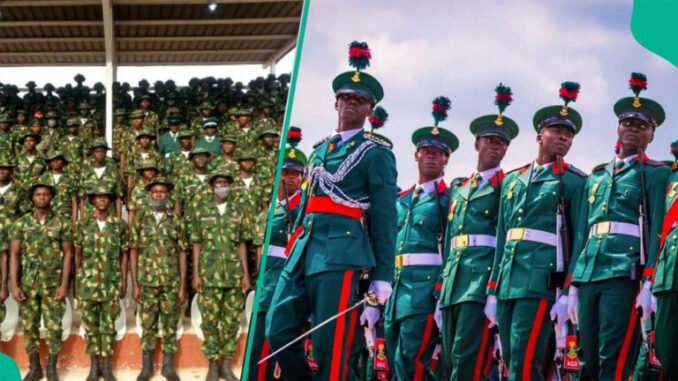
If you’re planning to become an officer in the Nigerian Army, you’ve likely come across the Direct Short Service Commission (DSSC) and the Short Service Combatant Commission (SSC). While both programmes recruit graduates as commissioned officers, they are designed for different career paths. This guide explains the major differences between DSSC and SSC in the Nigerian Army, including their requirements, training, duties, and career prospects.
Quick Comparison Table
| Feature | DSSC | SSC |
|---|---|---|
| Full Meaning | Direct Short Service Commission | Short Service Combatant Commission |
| Main Focus | Professional and specialist roles | Combat and leadership roles |
| Qualification | Degree/HND with relevant professional qualifications | Degree or HND |
| Training Duration | About 6 months | About 9 months |
| Entry Rank | Lieutenant (depending on corps) | Second Lieutenant |
| Service Type | Professional/technical | Combatant |
| Career Path | Specialist departments | Command and field operations |
What is DSSC?
The Direct Short Service Commission (DSSC) is an officer recruitment programme for graduates and professionals with specialized qualifications.
It is designed for applicants in fields such as:
- Medicine
- Engineering
- Law
- ICT
- Accounting
- Education
- Nursing
- Administration
DSSC officers provide professional and technical support within the Nigerian Army.
What is SSC?
The Short Service Combatant Commission (SSC) is an officer recruitment programme for graduates who want to build careers as combat officers.
SSC officers receive military leadership training and are responsible for commanding troops, participating in military operations, and leading combat units.
Major Differences Between DSSC and SSC
1. Purpose
DSSC recruits professionals to serve in specialized departments.
SSC recruits graduates who want to become combat and operational officers.
2. Educational Requirements
DSSC
- Bachelor’s Degree or HND.
- NYSC certificate where applicable.
- Professional qualifications may be required for certain positions.
SSC
- Bachelor’s Degree or HND.
- NYSC certificate where applicable.
- Professional licence is generally not required.
3. Training Duration
Training differs between both programmes.
| Programme | Training Duration |
|---|---|
| DSSC | About 6 months |
| SSC | About 9 months |
SSC training places greater emphasis on combat leadership and field operations.
4. Duties
DSSC Officers
- Medical services.
- Legal services.
- Engineering support.
- ICT operations.
- Administration.
- Logistics.
SSC Officers
- Lead combat troops.
- Plan military operations.
- Command soldiers during field assignments.
- Participate in peacekeeping and security operations.
5. Entry Rank
After successful training:
- DSSC officers are generally commissioned as Lieutenants (depending on corps).
- SSC officers are commissioned as Second Lieutenants.
6. Career Progression
Both programmes offer promotion opportunities based on:
- Performance.
- Years of service.
- Available vacancies.
- Professional development.
DSSC officers generally remain within their professional corps, while SSC officers advance through combat command appointments.
Which One is Better?
The right option depends on your career goals.
Choose DSSC if you:
- Have professional qualifications.
- Prefer technical or administrative roles.
- Want to use your academic or professional skills in the Army.
Choose SSC if you:
- Want to lead troops.
- Are interested in military operations.
- Aspire to build a combat leadership career.
Read Also: Civil Defence Salary for SSCE Holders 2026/2027: NSCDC Rank, Salary and Allowances
Frequently Asked Questions
Is DSSC different from SSC?
Yes. DSSC focuses on professional and specialist roles, while SSC focuses on combat leadership.
Which programme has longer training?
SSC training generally lasts longer than DSSC training.
Can graduates apply for both?
Applicants should apply for the programme that matches their qualifications and career interests once recruitment opens.
Which programme offers better promotion opportunities?
Both programmes have structured promotion systems, although career progression follows different paths depending on the officer’s role and corps.
Key Takeaways
- DSSC is designed for graduates with professional or specialist qualifications.
- SSC is intended for graduates interested in combat leadership.
- DSSC training lasts about six months, while SSC training is generally about nine months.
- Both programmes lead to commissioned officer status in the Nigerian Army.
- Your qualifications and career goals should determine which programme you choose.
Conclusion
Understanding the difference between DSSC and SSC in the Nigerian Army is important before submitting your application. While both programmes provide excellent opportunities to serve Nigeria as commissioned officers, they are designed for different responsibilities and career paths. Carefully review the eligibility requirements and choose the programme that best matches your qualifications, skills, and long-term career objectives.
Be the first to comment